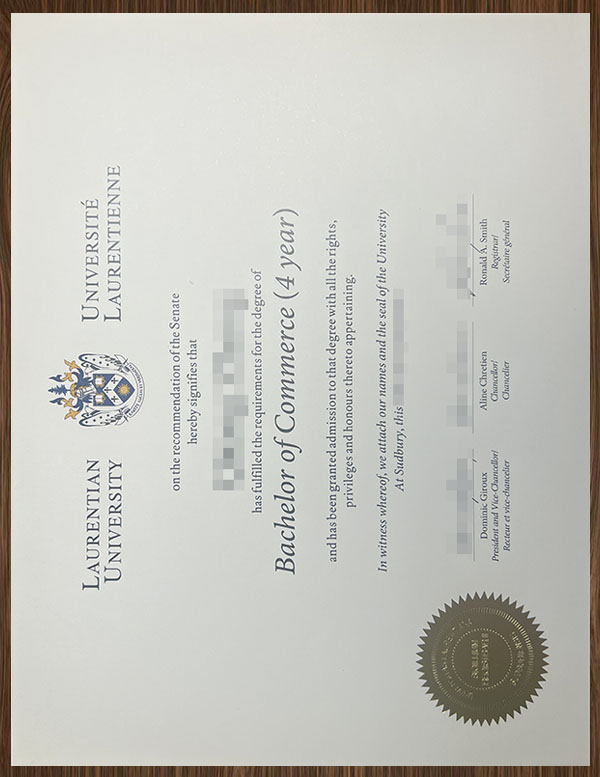
Laurentian University occupies a paradoxical position in Canadian higher education. Laurentian University degree, Laurentian University certificate, Laurentian University diploma. Chartered in 1960 as a nondenominational, bilingual institution in Sudbury, Ontario, it was designed to serve the vast, resource-rich expanse of northern Ontario—a region historically underserved by the province's southern universities. For decades, it built a reputation around its proximity to some of the world's richest mineral deposits, its unique tricultural identity (English, French, and Indigenous), and its role as a hub for rural and northern health research.
Yet in 2021, Laurentian became the first Canadian university in the modern era to file for insolvency, triggering program cuts, faculty terminations, and a reckoning with its own Francophone community that continues to shape its identity today. Novelty Laurentian University degree online, Perchase Laurentian University certificate online. Any honest profile of Laurentian must reckon with both its distinctive strengths and the institutional trauma that has redefined it.
Laurentian's academic identity is inseparable from its geography. Located in Greater Sudbury, a city of roughly 160,000 that serves as the hub of northern Ontario, the university sits at the heart of a mining region that has attracted global attention for both its mineral wealth and its environmental remediation efforts.
The Goodman School of Mines, the Mineral Exploration Research Centre, and the recently established Engineering Building reflect a deliberate strategy to align research and teaching with the region's economic backbone. Mining engineering students benefit from co-operative placements at nearby operations, learning from professionals working in one of the most mineral-rich areas on the planet .
How to get the Laurentian University degree?
Health sciences tell a parallel story. Reasons to order a Laurentian University degree online. The Northern Ontario School of Medicine, established as a partnership between Laurentian and Lakehead University, was created specifically to train physicians for underserved northern communities. The university's research strengths in rural and northern health, occupational safety, and Indigenous social work are not abstract academic exercises but responses to concrete regional needs. The Indigenous Social Work program, for instance, requires students to complete 700 placement hours working directly with Indigenous communities, taught by Indigenous faculty and staff.
Laurentian University is best understood as an institution in reconstruction—not of buildings, but of mission and trust. Its founding commitment to bilingualism and northern service remains its most distinctive asset, even as the 2021 cuts revealed how fragile that commitment could be in practice. The university's path forward depends on whether it can rebuild Francophone programming in meaningful partnership with the communities it serves, sustain its niche strengths in mining and health research, and convince students that a Laurentian degree carries value beyond the headlines of its insolvency. For those who value a small, regionally embedded education over national prestige, Laurentian still offers something worth considering: a campus surrounded by lakes and boreal forest, a faculty accustomed to close mentorship, and a location that places students at the center of some of Canada's most important resource and health challenges.